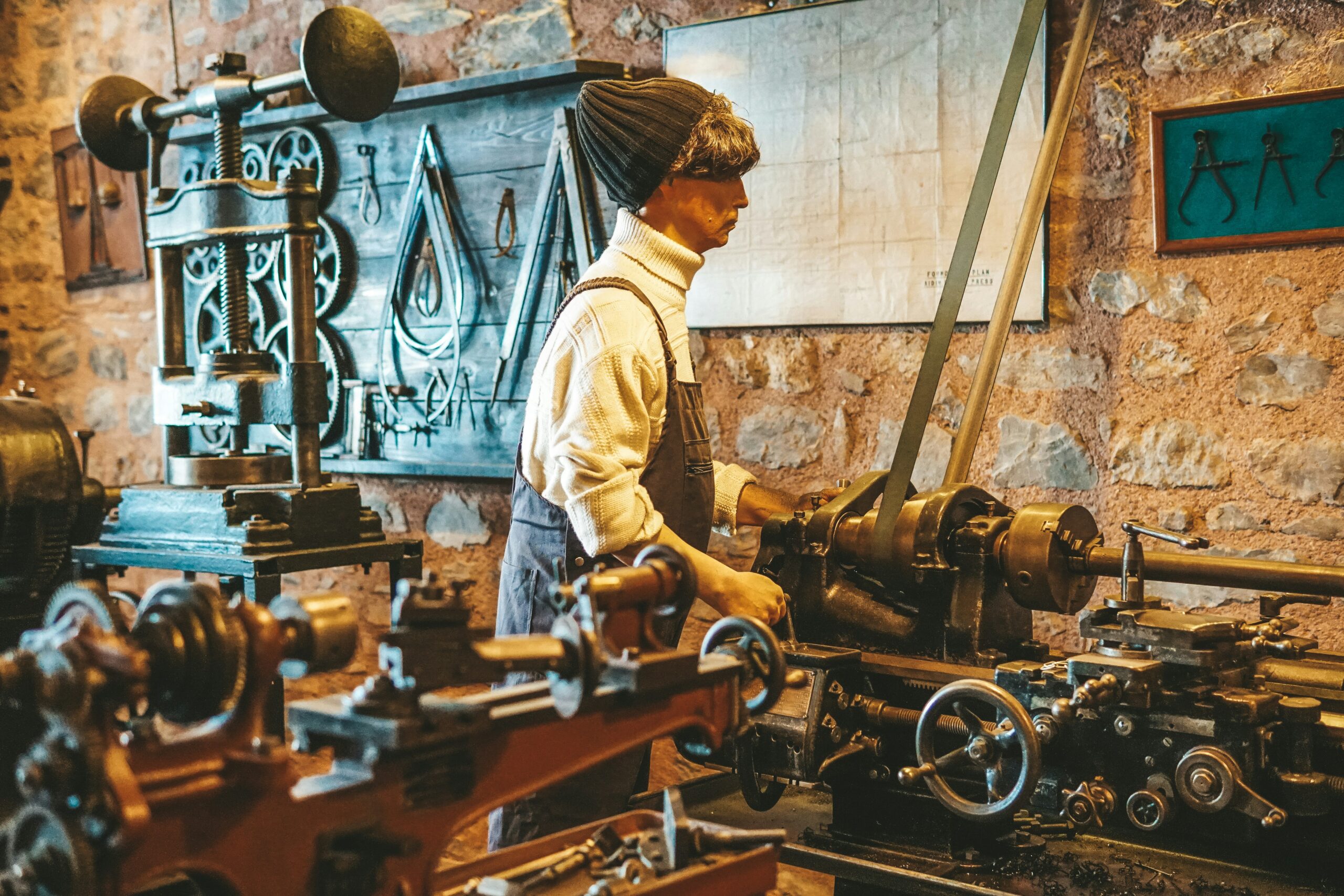
The Sim Corder Mill stands as a remarkable testament to America’s industrial past, where practical skill met visionary thinking. Nestled in the heart of the countryside, this mill isn’t just a symbol of rural progress; it represents a pivotal turning point in how early Americans harnessed natural resources with mechanical precision. Every stone and gear in this historic site speaks of a time when grit and knowledge combined to shape communities and economies.
What makes the Sim Corder Mill exceptional is not just its mechanical construction but its staying power across generations. At a time when technological innovation was still handcrafted, this mill embodied the evolution of milling techniques in North America. Preserved through time, it tells the story of bold experimentation and functional design that outpaced its era.
Craftsmanship That Surpassed Time
When we examine the Sim Corder Mill, we uncover not just a structure, but a legacy crafted by skilled hands. Constructed with an eye for both strength and efficiency, the design was rooted in maximizing natural power. It transformed flowing water into kinetic energy, grinding grain into flour with a level of accuracy that reflected the millwright’s expertise. This was engineering that valued durability over decoration, yet what emerged was an enduring kind of beauty.
The materials used were chosen not for ease, but for endurance. Each beam, wheel, and pulley reveals the quality and integrity of early American construction. In an age before power tools, artisans built with care, adapting design to the land’s natural contours. The result was a mill that blended into its environment while standing proudly as a beacon of human achievement.
Sim Corder’s Visionary Impact on Milling
Long before large-scale manufacturing took over the milling industry, pioneers like Sim Corder envisioned ways to improve productivity without losing craftsmanship. He didn’t just build a mill; he created a model for efficient rural enterprise. Corder’s ingenuity came through in how he modified existing European milling concepts, adapting them to local conditions and available resources. This practical intelligence changed how small communities processed essential goods.
Sim Corder’s mill provided more than flour; it offered opportunity. It became a place where people gathered, exchanged ideas, and fostered local trade. His approach to design and function meant that farmers could depend on the mill not just for output but for quality. In doing so, Corder helped anchor his region’s economic resilience while advancing sustainable production practices.
Technology That Defined a Generation
What sets the Sim Corder Mill apart from other historical mills is its blend of mechanical precision and adaptability. This mill was not built from a standard blueprint. Instead, it evolved from trial and error, constantly improving to meet new challenges. The result was an efficient, low-maintenance operation that could be managed by a small team, even during the busiest seasons.
Driven by water wheels and later incorporating early gear systems, the mill functioned at a scale that belied its size. Each part of the system worked in harmony from the hopper to the millstones because it had been carefully refined. This seamless integration of parts made the mill a reliable source of production for decades. It also offered a learning model for future innovators, showing how thoughtful engineering could yield significant results.
Preserving the Mill’s Authentic Legacy
Today, efforts to maintain the Sim Corder Mill serve not only to protect a building but to celebrate an era of American determination and innovation. Historical societies and conservationists work tirelessly to preserve their original components. From cleaning the stone walls to greasing the iron gears, every effort honors the craftsmanship that built this enduring structure. The preservation of this site goes beyond aesthetics; it’s about education and inspiration for generations to come.
Visitors who step inside the mill feel a connection to the past that textbooks can’t replicate. The aroma of aged wood, the creak of long-standing beams, and the hum of machinery all bring history to life. These sensory experiences remind us that innovation is not just about looking forward; it’s about understanding the ingenuity that got us here.
Education Rooted in Hands-On History
One of the most powerful aspects of the Sim Corder Mill is its ability to teach through experience. Schools and universities often arrange field trips to the site, allowing students to witness firsthand the fusion of physics, engineering, and community history. Unlike sterile museum exhibits, the mill offers absolute motion, real noise, and authentic craftsmanship. It bridges the gap between academic learning and applied knowledge.
This immersive educational value turns the Sim Corder Mill into more than a historical site; it becomes a classroom that invites curiosity. When students watch grain pass through the millstones or see the mechanics of a water wheel in action, they don’t just learn, they engage. They leave with a new respect for problem-solving and creative thinking that defined American ingenuity.
A Symbol of Progress and Perseverance
The Sim Corder Mill has survived changing economies, evolving technology, and even natural disasters, yet it stands firm. That resilience speaks volumes about the people who built it and the values they held. They believed in hard work, purposeful design, and supporting their communities with reliable infrastructure. This mill reflects all those ideals in its continued presence.
While newer technologies have taken over much of today’s milling, the principles on which the Sim Corder Mill was built still inspire. It reminds us that even the most advanced systems begin with a simple idea brought to life by determination and skill. It’s not just a relic; it’s a monument to what can be achieved when innovation serves both purpose and people.
Sim Corder Mill as a Living Legacy
The Sim Corder Mill doesn’t just preserve the past; it keeps it alive. In every moving part and weathered stone, we see a story of resilience, progress, and enduring craftsmanship. It teaches us that innovation isn’t limited to modern technology; it thrives wherever people choose to solve problems creatively and sustainably. As future generations seek inspiration, they will find it in places like this, where history speaks through action.
By honoring the legacy of Sim Corder Mill, we reaffirm the value of thoughtful design, community effort, and the enduring impact of innovation rooted in skill. It’s a place where yesterday’s brilliance meets today’s curiosity, ensuring that its story will continue to inspire for years to come.